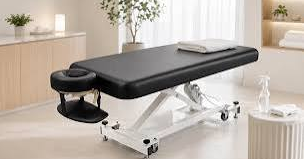
An electric table changes the way a treatment room works. Instead of bending, lifting and wrestling with manual adjustments, the therapist presses a control and the table rises, lowers or tilts smoothly. That small change adds up across a long day: less strain on the back and shoulders, quicker transitions between clients, and a calmer, more professional feeling in the room.
The catch is that electric tables vary enormously. Some are built for heavy daily use in a busy clinic, while others are better suited to a quiet home practice. Prices vary just as much, and the most expensive model is not always the right one. Knowing what to compare before you buy will save you from paying for features you never use, or missing ones you end up needing every day.
Start With How You Actually Work
The best place to begin is not a catalogue but your own working day. How many clients do you see? Do you work mostly with one type of treatment, or do you switch between massage, facials and body work? Do you need the table to sit very low for some clients and rise high for others? A table that fits a tall therapist doing deep tissue work may be wrong for a shorter therapist doing gentle facials. Write down the range of heights you use, the positions you need, and how often you adjust during a session.
Once you know your working pattern, compare models side by side rather than judging them one at a time. Reading a clear guide to the best electric massage table options and what to look for helps you separate genuine quality from marketing language, and it gives you a checklist to use when you test a table in person or read through a specification sheet.
Motors are the heart of an electric table, and they deserve close attention. A single motor usually controls height, while two or more motors allow the backrest and other sections to move independently. More motors mean more flexibility, but they also mean more parts that can eventually need service. Listen to the motor when it runs: it should be smooth and quiet, not strained or jerky. A noisy motor disturbs clients and suggests the mechanism is working harder than it should.
See also: Planning Ahead for Financial Independence in Later Life
Size, Stability and the Room Around the Table
Before ordering, measure the room, not just the table. An electric table needs space for the therapist to move on all sides, plus room for a stool, a trolley and the client to get on and off comfortably. Check the width when the table is at its lowest and highest settings, and think about doorways and corridors the table must pass through on delivery day. Also check the height of the ceiling if the table tilts, and confirm that the power point is close enough that the cable does not cross a walkway where clients or staff could trip over it. A table that fits the room on paper can still feel cramped once everything else is in place.
Stability matters as much as size. Press down on the corners and edges when you test a table, and watch for rocking or flexing. A stable table builds client confidence, especially for people who are nervous about lying on a raised surface. The base design affects this a great deal: a wide, well-balanced base stays steady, while a narrow base can feel tippy when a client shifts their weight or sits on the edge. If you treat heavier clients, test the table with weight near its rated limit rather than only with a light touch, because a table that feels solid when empty can behave very differently under a real working load.
Controls, Upholstery and Everyday Care
Controls should be simple enough to use without looking. Hand controls and foot pedals both have fans, and the right choice depends on how you work. If your hands are usually busy, a foot pedal keeps things moving. If you prefer precise adjustments, a hand control may suit you better. Either way, the control should feel solid, respond immediately and be easy to reach from both sides of the table.
Upholstery and maintenance close the list. The covering should resist oils, wipe clean between clients and stay comfortable through long sessions. Ask about the warranty on the motor, the frame and the upholstery separately, since they often differ. Keep the table clean and dry, avoid overloading it, and follow the maker’s service guidance, and an electric table should give years of reliable service. Ask whether the covering is replaceable on its own, since replacing a worn cover is far cheaper than replacing the whole table, and check that spare parts and service are available in your country.
Frequently Asked Questions
1. Is an electric table worth it for a small practice?
For most practices, yes, if you see several clients a day. The time saved on adjustments and the reduced strain on your body usually outweigh the higher price within the first year.
2. How much weight should an electric table support?
Choose a table rated well above the heaviest client you expect, including the force of treatment itself. A generous margin keeps the motor working easily and the table feeling steady.
3. What should I test before buying?
Test the motor noise, the smoothness of height changes, stability at the edges, and the comfort of the padding. If you cannot test in person, read detailed specifications and check the return policy.
Conclusion
Choosing an electric table is really about choosing how you want to work. Match the motors and controls to your treatments, the size to your room, and the build quality to your daily client load. Take time to test before you buy, compare specifications honestly, and check the warranty in writing. The right table will not draw attention to itself; it will simply make every session smoother, for you and for the people lying on it.


 By

 By