Closing a business, relocating to another property, or preparing a commercial unit for renovation often involves more work than removing old furniture and equipment. Walls, flooring, electrical fixtures, signage, and interior installations may all require careful attention. Business owners must also consider lease conditions, disposal requirements, and building management rules. Choosing an experienced 서울 철거업체 can make these transitions easier by establishing a clear demolition scope and organizing work around the property’s specific conditions.
Why Commercial Demolition Requires Careful Preparation
Commercial demolition is different from simply clearing an empty room. Restaurants, salons, offices, and retail stores contain different materials, fixtures, and utility connections that influence the removal process.
A restaurant may have ventilation ducts, kitchen equipment, and plumbing installations, while an office may contain partitions, suspended ceilings, and extensive electrical wiring. Understanding these differences helps contractors determine appropriate equipment, labor requirements, and safety measures before work begins.
Understanding Lease Restoration Responsibilities
Many commercial leases require tenants to restore their premises before returning them to property owners. However, the required condition varies depending on the agreement and the property’s original layout.
Some landlords expect the complete removal of interior installations, while others may allow certain fixtures to remain. Reviewing the lease and confirming expectations before demolition helps prevent unnecessary expenses.
Restoration can also involve wall repairs, painting, electrical finishing, and cleaning. These tasks should be discussed before work begins rather than treated as unexpected additions.
See also: Business Dissolution Lawyer: Understanding the Process of Closing Your Business Properly
What Determines Commercial Demolition Costs
Business owners frequently ask how much demolition will cost per square meter. However, reliable estimates require more information than floor area alone.
When evaluating 상가 철거 비용 , business owners should consider removal requirements, waste volumes, building access, and necessary restoration work, as these factors can significantly influence the final estimate.
For example, removing lightweight office partitions may involve different equipment and disposal arrangements than dismantling a restaurant kitchen. Upper-floor properties without convenient elevator access can also require additional labor for transporting waste.
Key Details to Confirm Before Hiring
A written demolition estimate should explain exactly what the contractor will remove, which materials will remain, and how the site will be prepared for handover.
Before approving a project, business owners should review the following details:
- Removal scope: Identify flooring, ceilings, partitions, equipment, and signage requiring demolition.
- Property access: Confirm elevator availability, parking restrictions, and waste transportation routes.
- Building regulations: Check permitted working hours, noise limits, and management approval requirements.
- Waste disposal: Clarify collection, transportation, and disposal responsibilities.
- Restoration work: Determine whether painting, wall repairs, and finishing tasks are included.
- Project schedule: Establish realistic completion dates before arranging the final inspection.
Documenting these requirements helps both parties understand their responsibilities and reduces the risk of disputes.
Managing Waste and Site Safety
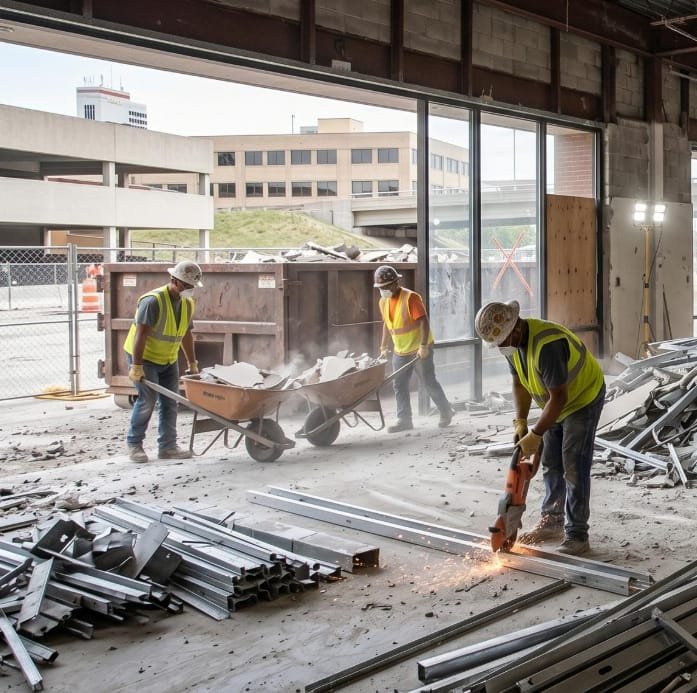
Demolition generates materials such as wood, metal, plasterboard, concrete, and damaged fixtures. Proper separation and disposal require planning, especially in densely populated commercial districts.
Contractors should identify suitable removal routes and protect shared building areas from unnecessary damage. Dust containment, controlled dismantling, and appropriate worker protection are also essential.
Certain structures and building systems require additional technical assessment before removal. Structural elements, fire protection equipment, and utility connections should never be dismantled without appropriate professional review.
Coordinating Demolition With Future Renovations
When a commercial property is being renovated rather than permanently closed, demolition must support the next construction stage. Removing too much can create additional restoration costs, while leaving unwanted installations may delay the new layout.
Contractors should review renovation plans and distinguish between materials requiring removal and elements intended for reuse.
For example, an existing plumbing connection might remain useful for a redesigned café, while damaged flooring or outdated partitions may need complete removal. Early coordination can reduce unnecessary rework.
Preparing the Property for Final Handover
Completing demolition does not necessarily mean the premises are ready to return to the landlord. Remaining waste, unfinished surfaces, damaged shared areas, or improperly terminated utilities can create complications during inspection.
A final walkthrough should compare the completed work against the agreed restoration scope. Photographs and relevant disposal documentation can provide useful records.
Business owners should also allow enough time for corrections before the contractual handover date, particularly when building management approval is required.
Conclusion
Commercial demolition requires organized planning, transparent pricing, and careful coordination between property owners, tenants, and contractors. Understanding restoration obligations, building access, waste management, and project schedules helps businesses avoid preventable complications. Professional services can simplify the transition from an occupied commercial space to a cleared or restored property. Thorthor.co.kr provides commercial demolition, interior removal, property restoration, and waste handling services across the Seoul metropolitan area, supporting businesses through different stages of property clearance and preparation.


 By