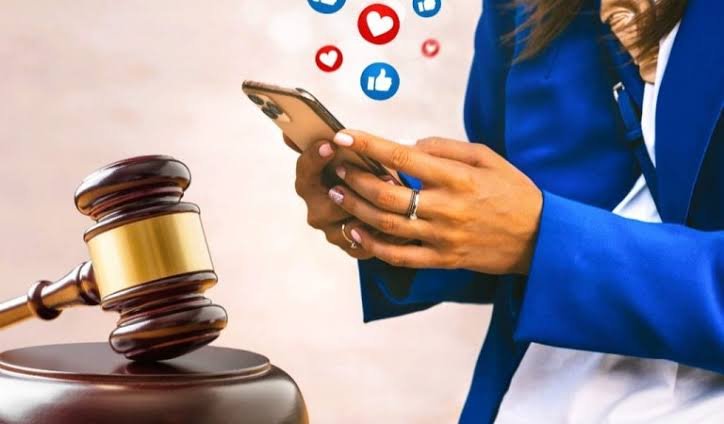
The misuse of Social media platforms like Instagram, TikTok, Facebook, Threads, and other applications is attached to serious legal consequences. Anything that harms other people on social media platforms constitutes a criminal offense. Therefore, evidence such as images, messages, texts, phone calls, videos, photos, and screenshots can be useful in UAE courts.
Nonetheless, it is a sufficient and acceptable form of evidence that is covered under federal laws, including Federal Decree Law No 46 of 2026, Criminal procedure Law, and Cybercrime laws.
There is a significant rise in the use of various platforms in recent times that increases the risk of cybercrimes directly related to social media. Social media users should understand that online activity can be traced through account details, device information, timestamps, platform records, and communication history. In legal disputes, digital evidence should be preserved in its original form and should not be edited, cropped, deleted, or publicly shared. A person who receives abusive messages, threats, defamatory comments, or private content shared without consent should avoid replying emotionally. Instead, they should save the evidence, note the date and time, identify the platform used, and report the matter through the correct legal or platform channel. In business disputes, social media evidence can also help prove misleading advertisements, fake accounts, harassment, or reputation damage. However, the evidence should be collected carefully, because unlawful recording, editing, or public circulation of private material may create separate legal consequences.
UAE laws Related to Social Media Platforms and Electronic Evidence:
UAE government provides a full-fledged shield to online users within its territory. There is a range of federal and local laws that support the legitimate use of social media. It may include Federal Decree-Law No. 35 of 2022 based on Evidence in Civil and Commercial Transactions.
Secondly, Federal Decree-Law No. 38 of 2022 related to Criminal Procedures also supports the legal use of social media.
Thirdly, the Federal Decree-Law No. 34 of 2021 was introduced to counter cybercrime and Rumors related to social media. Fourthly, the Federal Decree-Law No. 46 of 2021 also present that regulates various kinds of electronic transactions and trust services.
Furthermore, UAE Courts are also accepting digital evidence in court proceedings. The evidence has weight and are submitted to the courts during trials. However, all the provided piece of evidences are verified and resonates to be used court proceedings as part of digital evidence in a case.
Nonetheless, Federal Decree Law No 46 of 2026 fully supports it and allows the user to officially submit the evidence from extracted from digital platforms as acceptable and handy evidence in a criminal case. If you need more assistance then meet with a legal expert who can provide you step-by-step useful information and legal support.
Social media lawyers in the UAE assist individuals and businesses in cases involving online defamation, harassment, privacy violations, fake accounts, cyberbullying, misleading posts, and misuse of digital content. They can review screenshots, messages, videos, and platform records, assess legal risks, prepare complaints, and guide clients through police, cybercrime, civil, or court procedures.
What are the UAE laws for Criminal Procedures?
As per Law no 38 of 2022, the UAE government has permitted investigators to gather digital evidence in criminal proceedings. The UAE courts can collect digital evidence and examine it purposely to identify its usefulness.
The police authorities in the UAE will be directly involved in this, who will be responsible for the collection of digital evidence and take full control over communication devices for future court proceedings.
The Federal Decree-Law No. 38 of 2022 directly regulates the collection and examination of digital evidence used in criminal investigations.
Public prosecution will be directly involved in the authorization of examination and search of electronic devices or gadgets.
They can even seize the devices as per the requirement. The prime objective remains to serve justice and reveal the truth.
Read Also: Meet Thomas Berkley: The Entrepreneur and Founder Behind CSM Collective
The use of Digital Proofs in Criminal Court Proceedings and Investigations:
Social media platforms such as WhatsApp, Facebook, TikTok, Threads, YouTube, Instagram, and others are being widely accepted as a major source of electronic evidence in all UAE Courts.
The Federal Decree-Law No. 35 of 2022 fully supports it and therefore recognizes emails, electronic media, messages, calls, and other electronic records as forms of digital evidence on which the UAE courts can rely upon.
However, it is not conclusive evidence; the UAE courts examine and investigate it for completeness, legitimacy, accuracy, and relevance.
Electronic Evidence and its Relevance, Completeness, and Legitimacy:
The digital evidence is also known as electronic evidence. It is not automatically accepted as just reason. UAE courts will analyze and evaluate the accuracy and legitimacy of digital evidence grabbed form digital mediums.
Furthermore, a verification process is performed by the UAE courts to ensure its completeness and admissibility. Before the acceptance and use of digital evidence, there is a major considerations that must be taken into account are discussed below.
All electronic evidences provided in the UAE courts must be relatable directly to the case, and the facts should be relevant and correct. Besides, the electronic evidence must not be edited, morphed, altered, or misled in any way.
Besides, the electronic evidence should be meaningful and vivid. Any baseless or useless evidence is not entertained by the UAE courts.
Additionally, the digital evidence should be in an understandable format and must be accepted in its original form. All evidence collected should be done lawfully without hacking or authorized access to an account. UAE law never permits a breach of the law for the collection of evidence.
Specifications for Verification and the UAE Authorities Involved:
The UAE courts will verify the content submitted to them. They will check its originality, and there is involvement of expert reports to do so. The technical reports and verifications are useful in getting proof and evidence.
Moreover, the forensic department will be directly involved in digital verification. The department will ensure the evidence is presented properly in the UAE Courts according to its decorum. This will make the evidence valid and acceptable.
Seek legal assistance from well-versed lawyers and legal advisors to ensure the evidence is accurate and not fabricated. They will aid in assessing digital evidence and ensure no manipulation takes place.
The Use of Digital Evidence in the Criminal, Civil and Family Cases:
In today’s modern-day world, many cases are resolved based on evidences from social media posts and information gathered. Civil, criminal, and family cases may use posts and electronic data that is used as evidence against individuals and businesses.
Screenshots are often used as a primary source of evidence. However, legal valuation of the screenshot is essential. Forensic testing may be done before it is presented in UAE courts.
Contrarily, the screenshots may be edited or fabricated to change their originality. Authenticity is a major setback, and thus, it can easily be challenged it courtroom.
Therefore, it is advised to get a legal team on your side. The lawyers in the UAE will assess the admissibility of the digital record and screenshots as a source of evidence under UAE law.
Ending Note:
Digital evidence should be supported with proper context, such as the account username, profile link, date, time, conversation sequence, and any related communication before or after the disputed post. Courts may look at whether the evidence is complete, reliable, and connected to the person accused. In some matters, technical experts may be required to verify metadata, device records, or platform information. Parties should avoid deleting posts, blocking access, or altering conversations before legal review. A well-preserved digital record can strengthen the case and reduce objections about authenticity.
.


 By
By