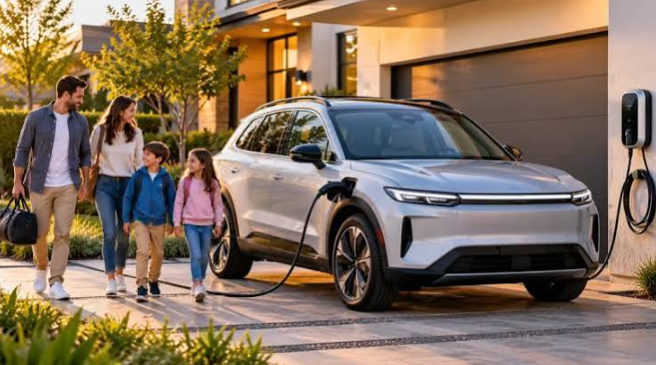
Choosing a family vehicle involves balancing space, comfort, safety, convenience and running costs. For households with several passengers, the decision can be more complex because the vehicle needs to accommodate people and their belongings without making everyday journeys uncomfortable. A larger electric vehicle may be worth considering for families who want to combine passenger capacity with an alternative to conventional petrol or diesel power.
However, the number of seats alone does not determine whether a vehicle is suitable. Buyers should examine how the cabin is arranged, how easily passengers can enter and exit, what luggage space remains available and whether the charging requirements fit their routine.
Understanding Passenger Capacity
A vehicle designed for seven occupants can offer flexibility for larger families or people who regularly travel with relatives and friends. It may also be useful when a household wants to avoid taking two vehicles for the same journey.
Yet advertised seating capacity should be considered alongside the actual cabin layout. The width of each seat, legroom, headroom and access to the rear row all influence comfort. Buyers should ideally inspect the vehicle in person and sit in each row before making a decision.
The third row deserves particular attention. Some vehicles provide easier access and more usable space than others. Families who frequently carry adults in the rear seats should check the available room carefully rather than assuming that every seat will provide the same level of comfort.
Evaluating the Electric Driving Experience
Electric vehicles use an electric motor and a rechargeable battery rather than relying on a conventional internal-combustion engine for propulsion. This changes the driving experience and introduces different ownership considerations.
Electric powertrains can deliver smooth acceleration and quiet operation. For families, these characteristics may contribute to a comfortable experience during city journeys and longer drives. Buyers should still assess how the vehicle responds in traffic, on motorways and when carrying a full passenger load.
Driving range is another important consideration. The distance a vehicle can travel depends on factors such as battery capacity, speed, temperature, terrain, driving style and the use of heating or air conditioning. Official range figures provide a useful comparison, but real-world performance may differ.
Planning Charging Around Daily Life
Charging access can influence whether an electric vehicle is convenient. Households with suitable home parking may be able to install a charger, subject to property permissions and electrical requirements. Others may depend on public charging networks.
Before purchasing, buyers should identify charging locations near home, work and regular destinations. They should also understand the vehicle’s charging specifications and the time required for different charging methods.
For longer journeys, planning stops is important. A route should account for charging availability, expected energy use and a reasonable reserve. Charging infrastructure varies by location, so buyers should verify current availability rather than relying on assumptions.
Considering Space for Passengers and Luggage
A larger vehicle may offer generous passenger accommodation, but luggage capacity can change when all seats are in use. Families should examine the boot space with the third row raised and compare it with their typical needs.
For example, a household travelling with several children may need room for school bags, sports equipment or a stroller. A family taking longer holidays may require additional luggage space. Folding rear seats can provide flexibility, but buyers should check how easily the seating arrangement can be changed.
Storage compartments, cup holders, charging ports and climate-control arrangements can also improve convenience during everyday use.
Safety and Driver Assistance
Safety should remain central to any family vehicle purchase. Buyers should review the available airbags, braking systems, electronic stability features, child-seat mounting points and driver-assistance technologies.
Features such as parking assistance, cameras, lane-related alerts and adaptive cruise control may be available depending on the model and specification. Their presence should not replace attentive driving. It is important to understand what each system does, where it has limitations and whether it is included in the particular vehicle being considered.
Parents should also check how easily child seats can be installed and whether seat belts are accessible for all intended passengers.
Comparing Ownership Costs
The purchase price is only one part of vehicle ownership. Buyers should consider charging costs, insurance, tyres, servicing, warranty coverage and the expected cost of maintaining components over time.
Electric vehicles may have different maintenance requirements from petrol or diesel vehicles, but costs vary by model and market. Warranty terms should be reviewed carefully, particularly those relating to the battery and electric drivetrain.
Families researching a 7 passenger electric car can use the vehicle’s official information as a starting point, then compare its specifications with their passenger, charging and daily-use requirements.
Frequently Asked Questions
1. Is a seven-seat electric vehicle suitable for a large family?
It may be suitable if the seating layout, third-row access, luggage capacity and charging arrangements meet the family’s needs. A physical inspection is recommended.
2. What should buyers check about electric vehicle range?
Review the official range figure, battery and charging specifications, and consider how weather, speed, passenger load and driving conditions may affect real-world distance.
3. Can a seven-seat vehicle carry luggage for every passenger?
Not necessarily. Luggage capacity may be reduced when all seats are occupied. Check the available boot space with the full seating arrangement in use.
Conclusion
A larger electric vehicle can offer families a combination of passenger flexibility and electric driving, but the right choice depends on more than the advertised seat count. Cabin comfort, third-row access, luggage capacity, charging access, safety equipment and ownership costs should all be evaluated. Taking time to compare these factors helps buyers choose a vehicle that supports their actual routines and travel requirements.


 By